How to Make a Sourdough Starter from Scratch Recipe
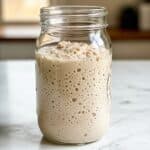
This guide provides detailed instructions on how to create and maintain a sourdough starter from scratch using flour and water. The sourdough starter is a natural leavening agent made by cultivating wild yeast and bacteria, essential for baking flavorful, tangy sourdough bread. The process involves initial mixing, multiple feedings, and regular maintenance to develop a robust and bubbly starter ready for baking.
- Prep Time: 10 minutes
- Cook Time: 0 minutes
- Total Time: 5 to 7 days depending on starter maturity
- Yield: About 1 cup of active sourdough starter 1x
- Category: Baking
- Method: No-Cook
- Cuisine: International
- Diet: Vegan
Ingredients
Scale
Basic Ingredients
- ½ cup whole wheat flour or unbleached all-purpose flour
- ¼–⅓ cup water, ideally at 75°F
Tools
- 1 glass jar or bowl (about 32 ounces capacity)
- 1 paper towel
- 1 rubber band
- Wooden spoon for stirring
Instructions
- Initial Mixing: In a glass jar, combine ½ cup whole wheat flour with ¼ cup of water. Stir thoroughly to achieve a thick pancake batter consistency, adding up to an additional ¼ cup water if needed. Cover the jar loosely and let the mixture rest for 30 minutes to begin fermentation.
- First Feeding and Rest: After the 30-minute rest, stir the mixture well. Cover the jar with a paper towel secured by a rubber band, allowing airflow while preventing contaminants. Let it sit at room temperature in a warm spot for 24 hours to encourage microbial activity.
- Check and Feed First Time: After 24 hours, inspect the mixture for bubbles, indicating fermentation. If bubbles are present, feed the starter by adding ½ cup all-purpose flour and ¼ to ⅓ cup water. If no bubbles appear, stir the mixture and allow it to rest an additional 24 hours.
- Second Feeding: On the following day, check again for bubbles. If bubbles are visible, discard half of the starter to control volume and feed with ½ cup all-purpose flour and ¼ to ⅓ cup water. Stir well and leave to sit for another 24 hours.
- Third Feeding: Repeat the discard and feed process: remove half the starter and add ½ cup all-purpose flour and ¼ cup water, stirring thoroughly. Allow to ferment for 24 hours.
- Additional Feedings: From days 4 to 6, you may feed the starter twice daily if intending to use it soon. Consistently feeding and discarding will strengthen the starter, promoting bubbles and doubling in size within 8 hours post-feeding.
- Storage and Maintenance: Once the starter is reliably active and rising, it can be stored in the refrigerator and fed about once a week. When preparing to bake, remove the starter from the fridge 24 hours ahead, feed it, and allow it to come to room temperature for optimal activity.
Notes
- Use filtered or non-chlorinated water to avoid inhibiting fermentation.
- Maintaining a warm environment (around 75°F) helps accelerate starter activity.
- Whole wheat flour is recommended at the start for better fermentation due to higher nutrient content.
- Discard portion of the starter helps control microbial balance and prevents excessive volume.
- If starter develops a pink or orange tint or unpleasant odor, it should be discarded and started anew.
- Feedings can be adjusted based on ambient temperature and starter vigor.
Keywords: sourdough starter, sourdough, natural yeast, fermentation, bread starter, baking starter, homemade starter